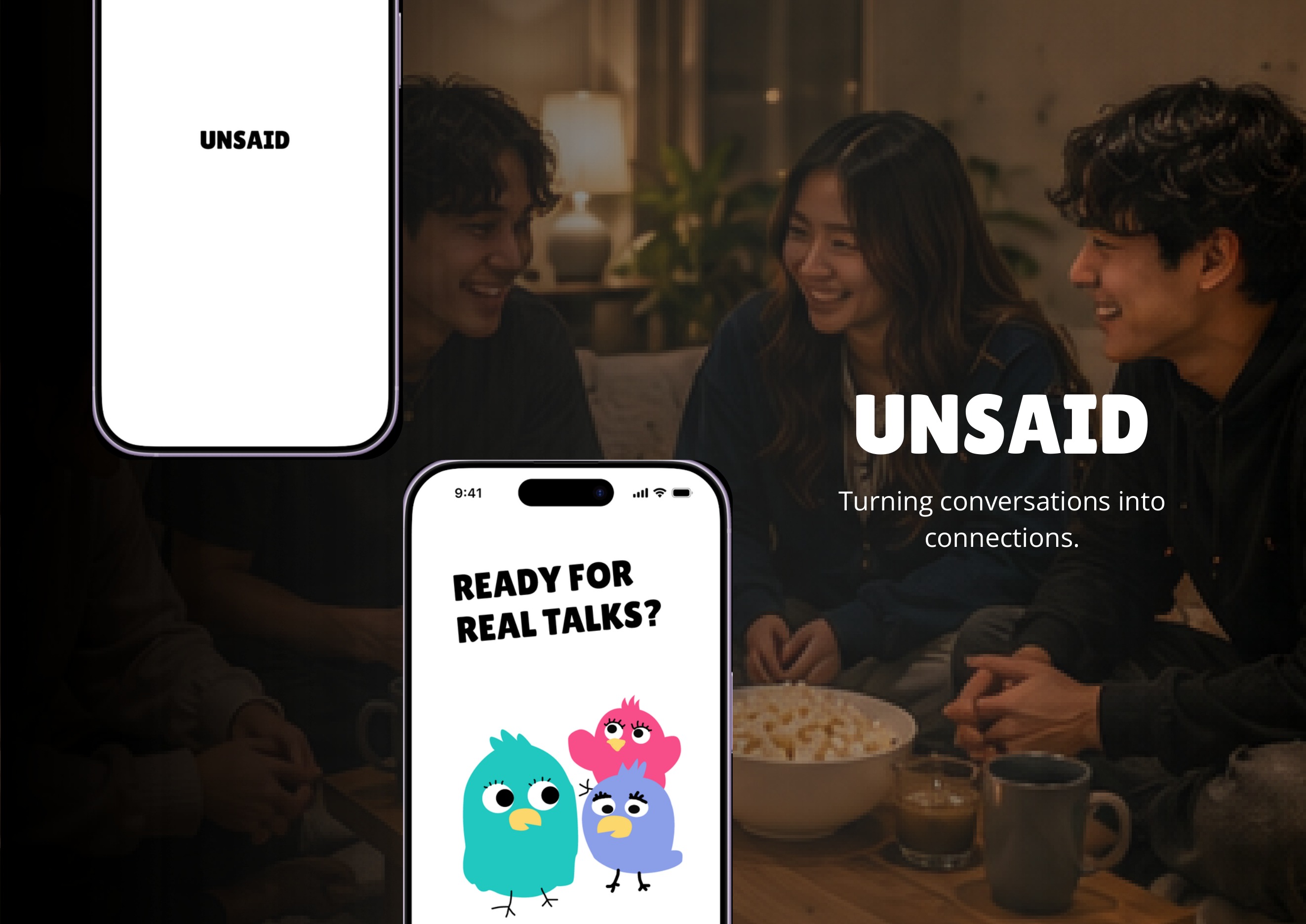
Turning conversations
into connections.

A game-based mobile experience that helps small groups move past small talk, hear different perspectives and build genuine trust.

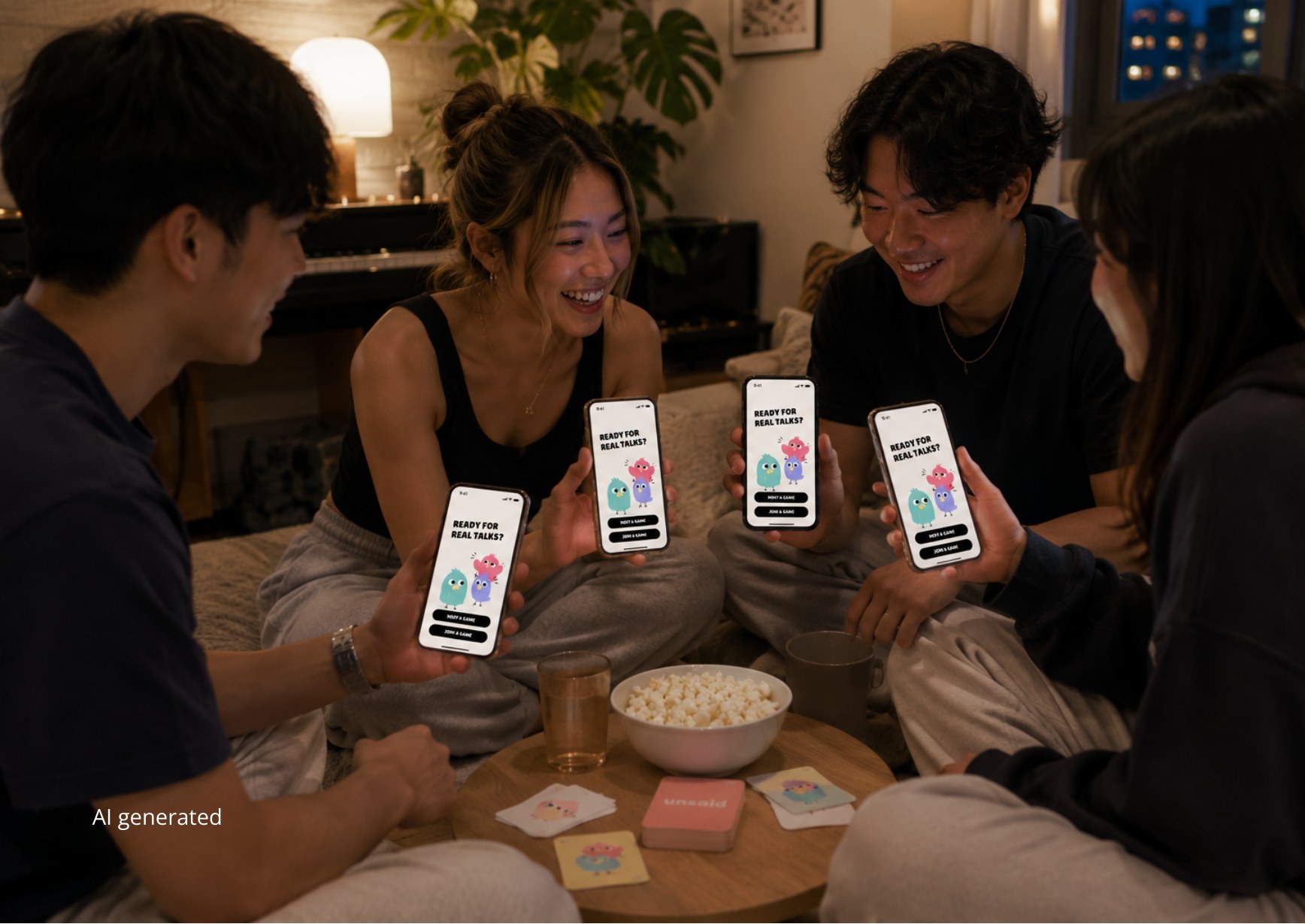
Friends gathered around the Unsaid mobile game

The project in one line

Difficult conversations feel lighter when nobody has to start them alone.

My role

Independent graduation project across research, concept, UX/UI, visual identity, prototyping and testing

Focus

Inclusive interaction · social connection · game mechanics

Context

UNSW DDES3101 Graduation Project

Product overview

The experience at a glance.

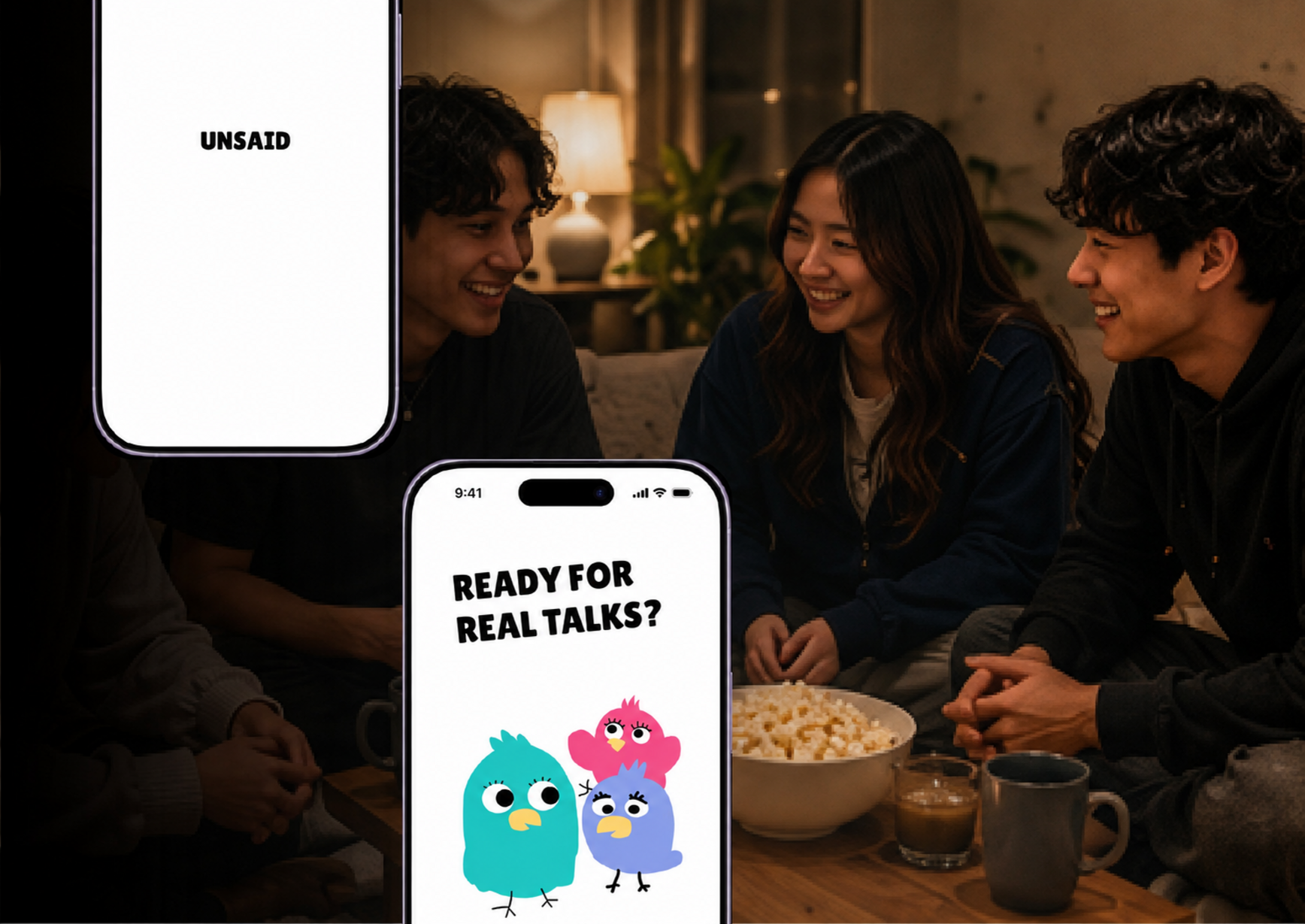
Full Unsaid product overview presentation board
Overview · A mobile game designed to encourage meaningful conversation.
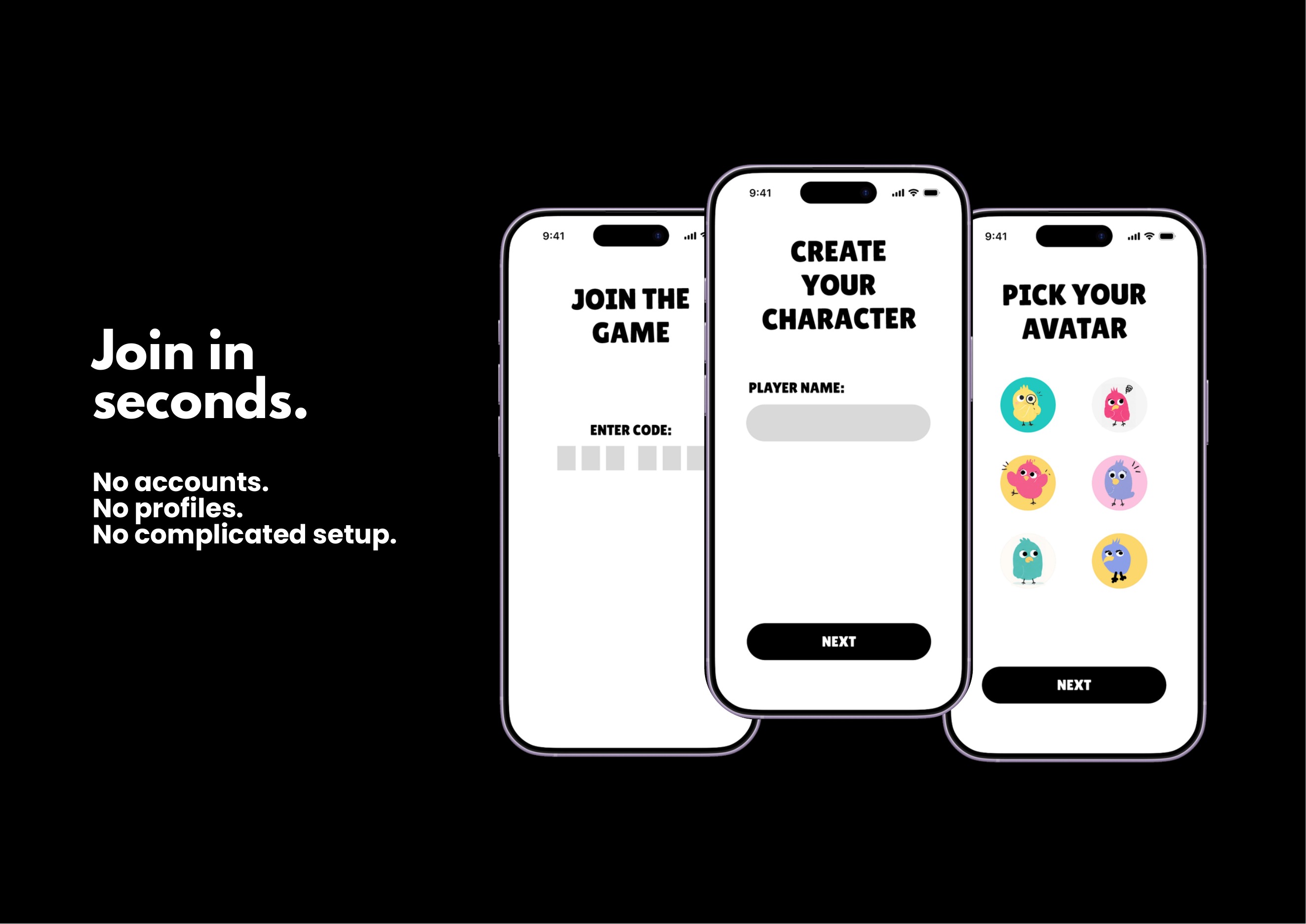
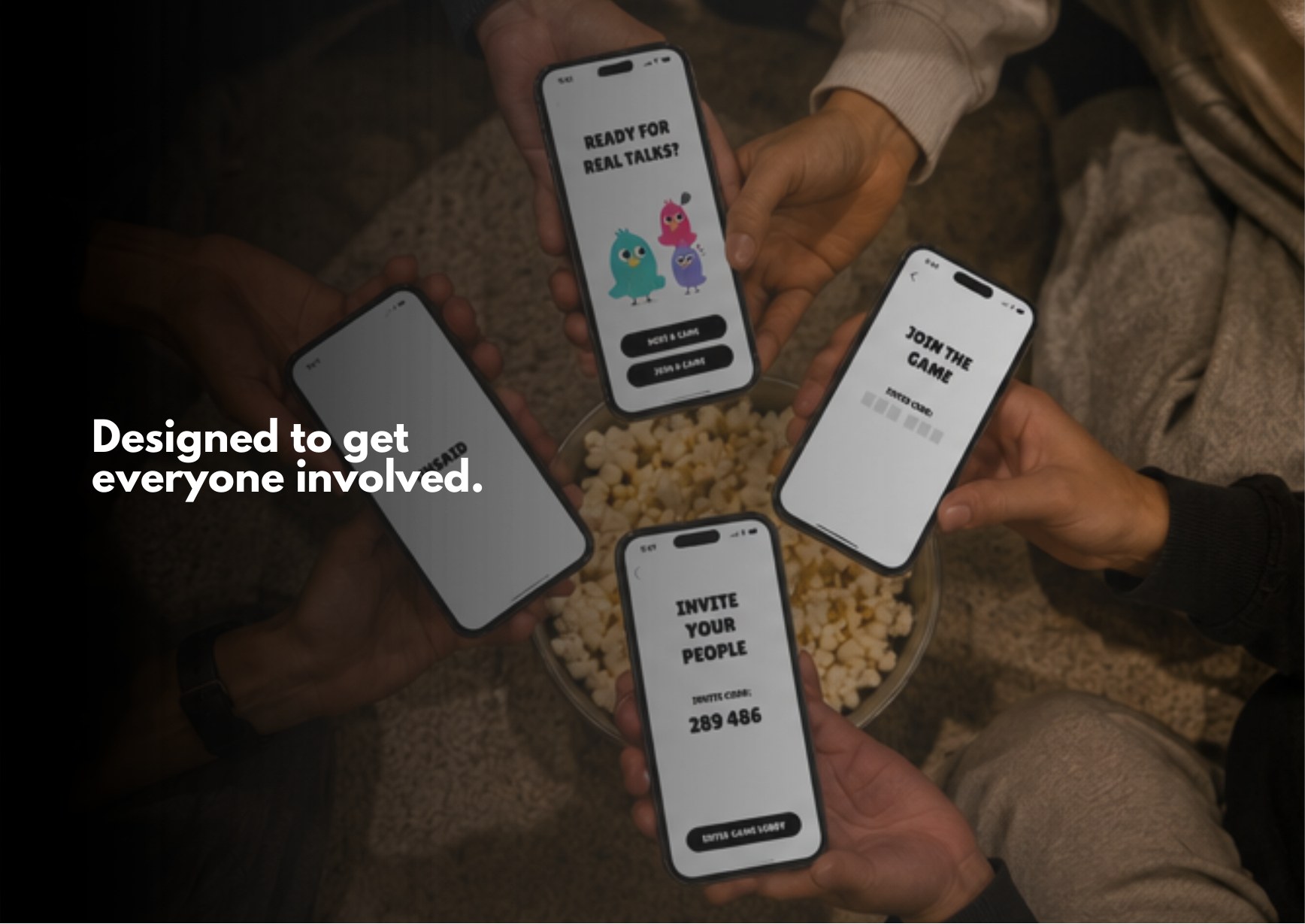
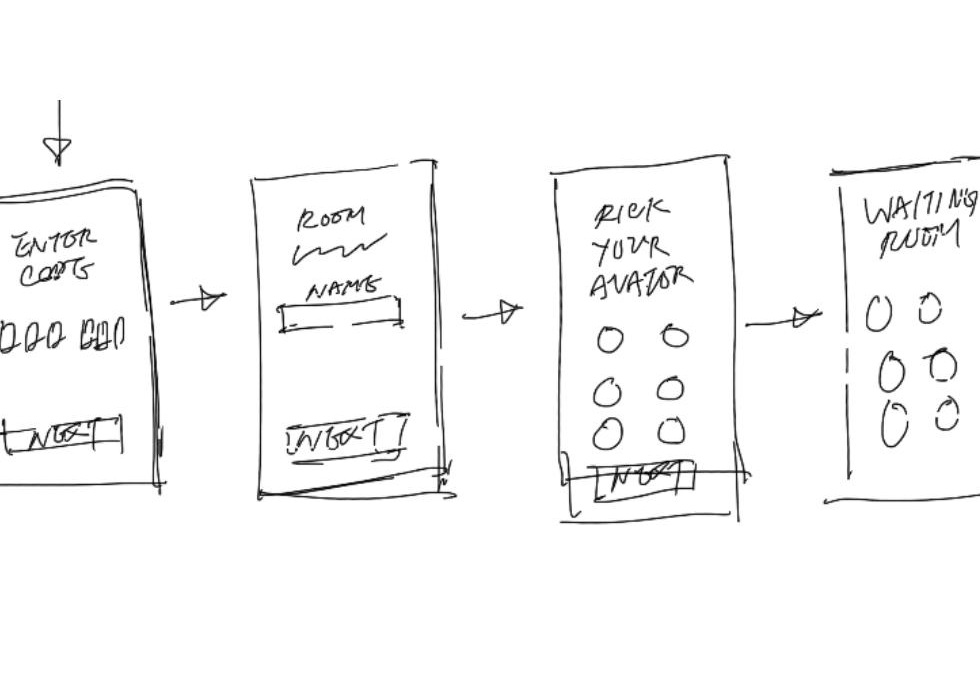
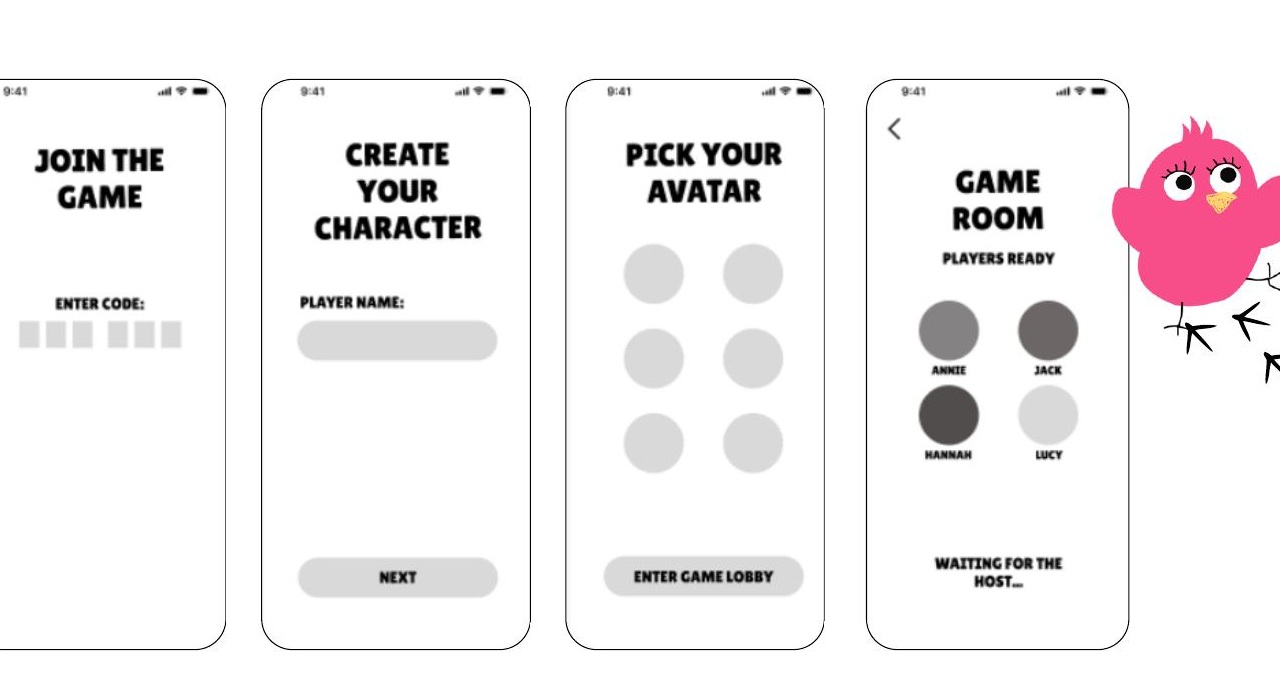
Full Unsaid onboarding flow presentation board
Core flow · Join, create a character and enter the room.
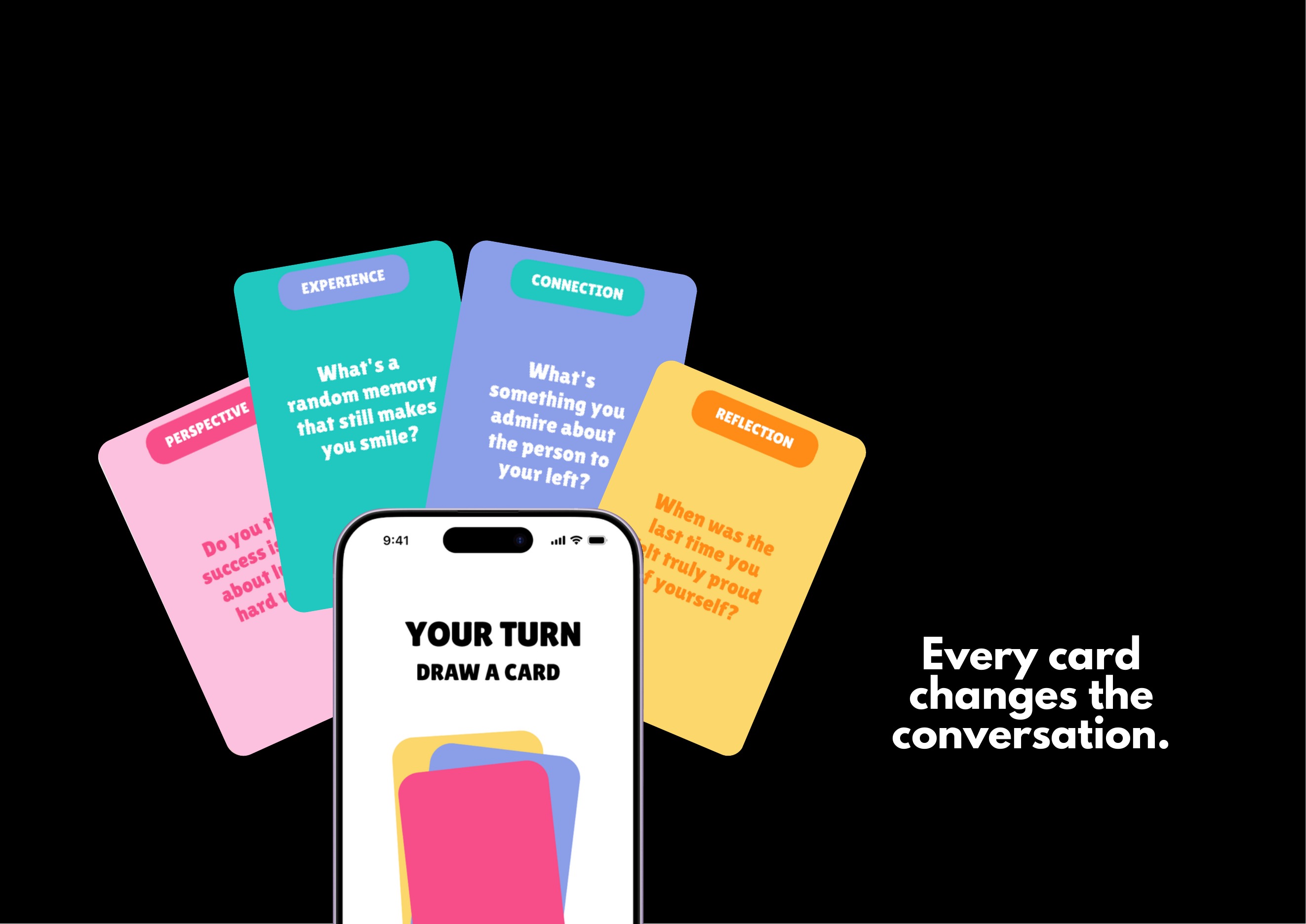
Full Unsaid prompt card system presentation board
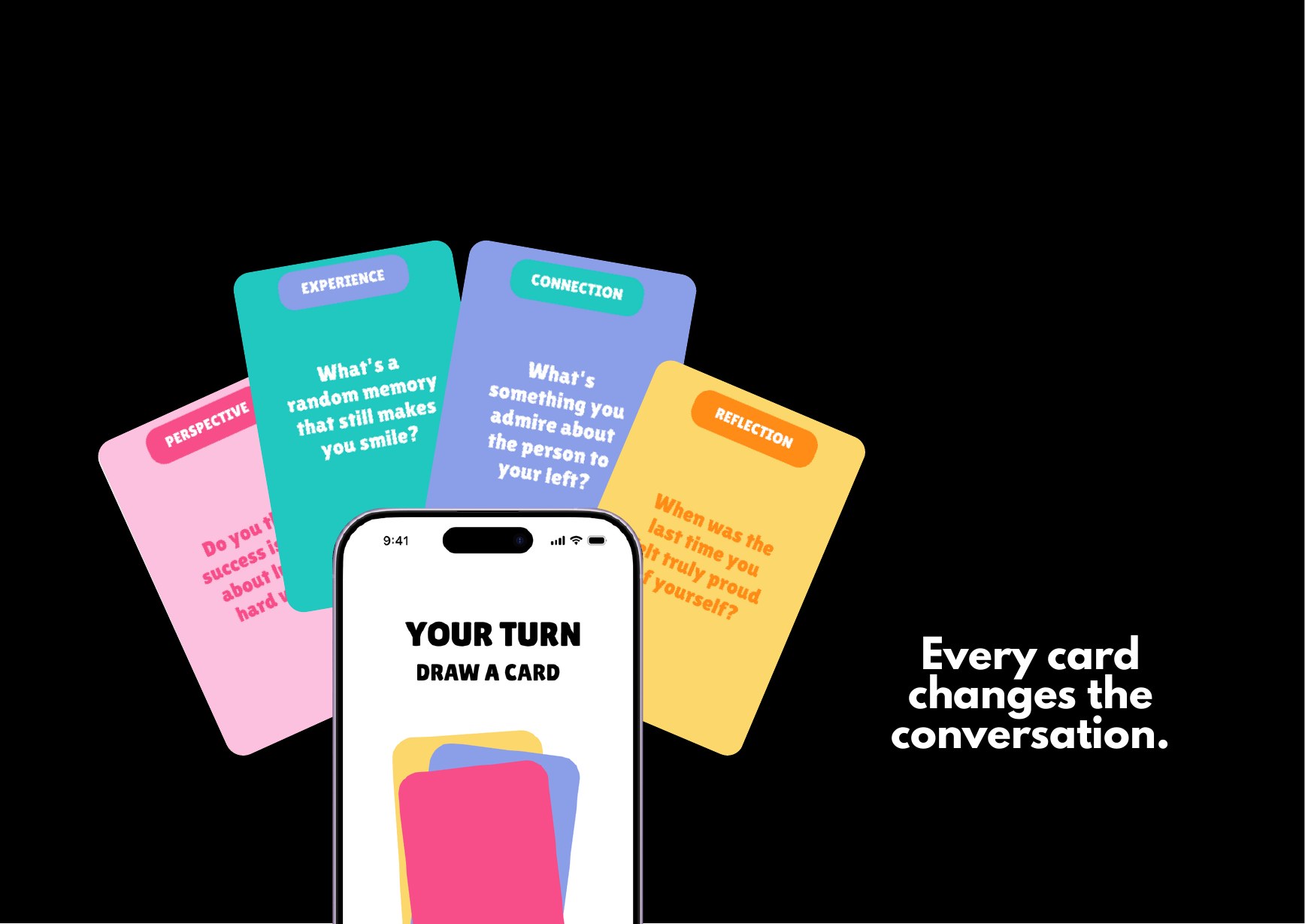
Game system · Every card changes the direction of the conversation.

01 · The tension

Always connected. Not always understood.

People are constantly exposed to opinions and expectations about appearance, identity and success. When we feel we do not meet those standards, opening up can feel risky.

Awareness campaigns tell people to accept themselves, but they rarely create a real moment for reflection. I saw an opportunity for design to make vulnerable conversations feel safer and more approachable.

What if building connection felt like playing a game?
Full Unsaid problem statement presentation board

Remove the pressure

Give everyone a turn

Reflect together

02 · Reframing the idea

From beauty standards to the things we leave unsaid.

The first concept focused on beauty diversity. Feedback revealed that it felt like a cosmetic app and represented only one part of a much wider issue.

I reframed the experience around self-perception, identity and lived experience. Inclusivity became a design principle: each participant should feel equally valued, regardless of what they have lived through.

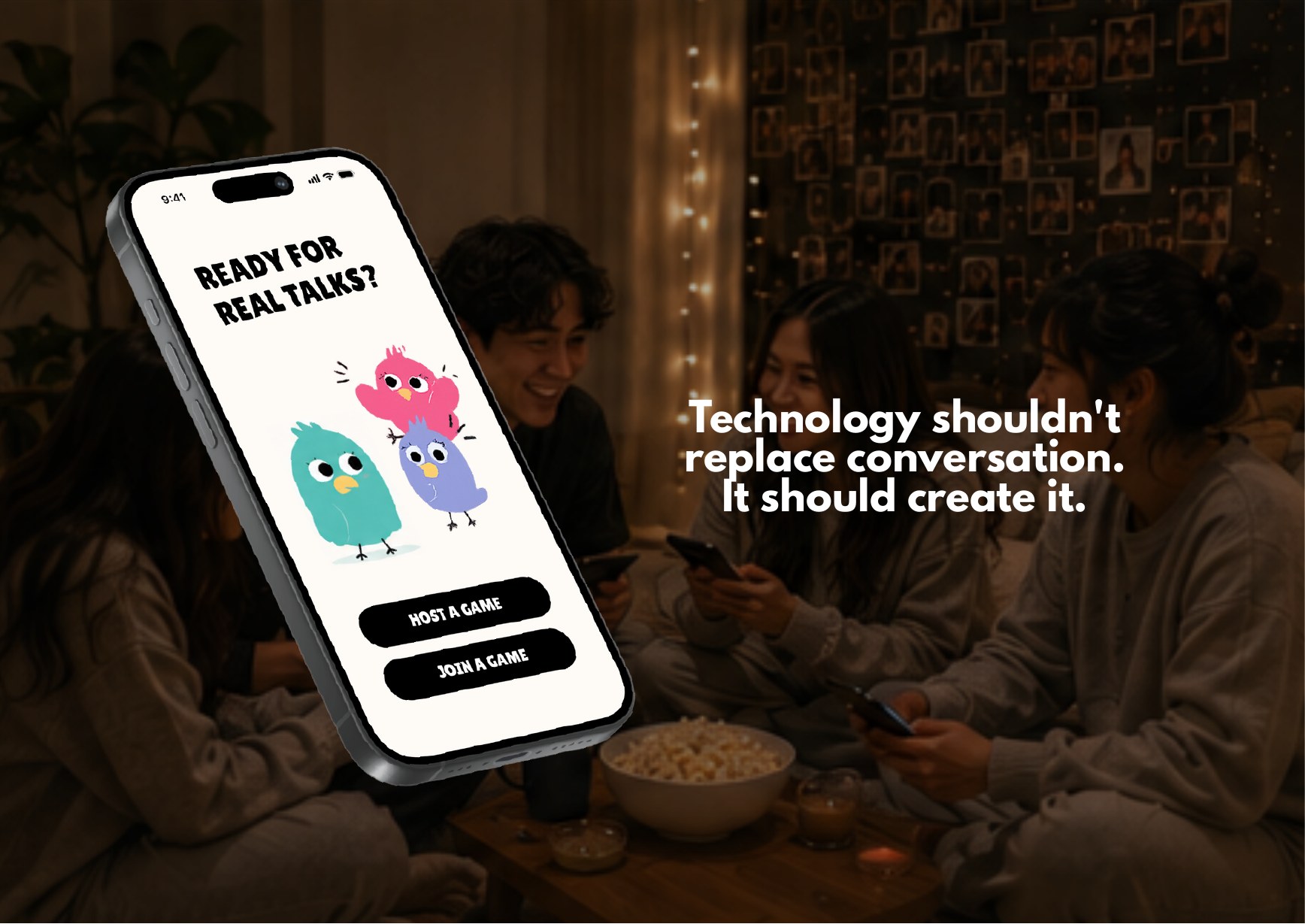
Friends each using their own device during an Unsaid gameUnsaid principle that technology should create conversation, not replace it
The design principle

Inclusivity is not only what the cards ask.
It is how the game makes space for every voice.

03 · Building the game

Simple to enter.
Structured to go deeper.

One player hosts and shares a room code. Everyone joins on their own phone, takes turns drawing random prompts, and finishes each cycle with a shared group reflection.

01

Join in seconds

No accounts, profiles or complicated setup. The host-or-join flow gets people into the same room quickly.

02

Take equal turns

A visible turn order prevents one voice from dominating and helps everyone prepare to contribute.

03

Draw at random

Random prompts remove the pressure of personally choosing a vulnerable subject.

04

Reflect together

A shared closing question turns separate answers into empathy and collective reflection.

Full Unsaid low-fidelity process board
Low-fi · Mapping the host, join, turn-taking and reflection flows.
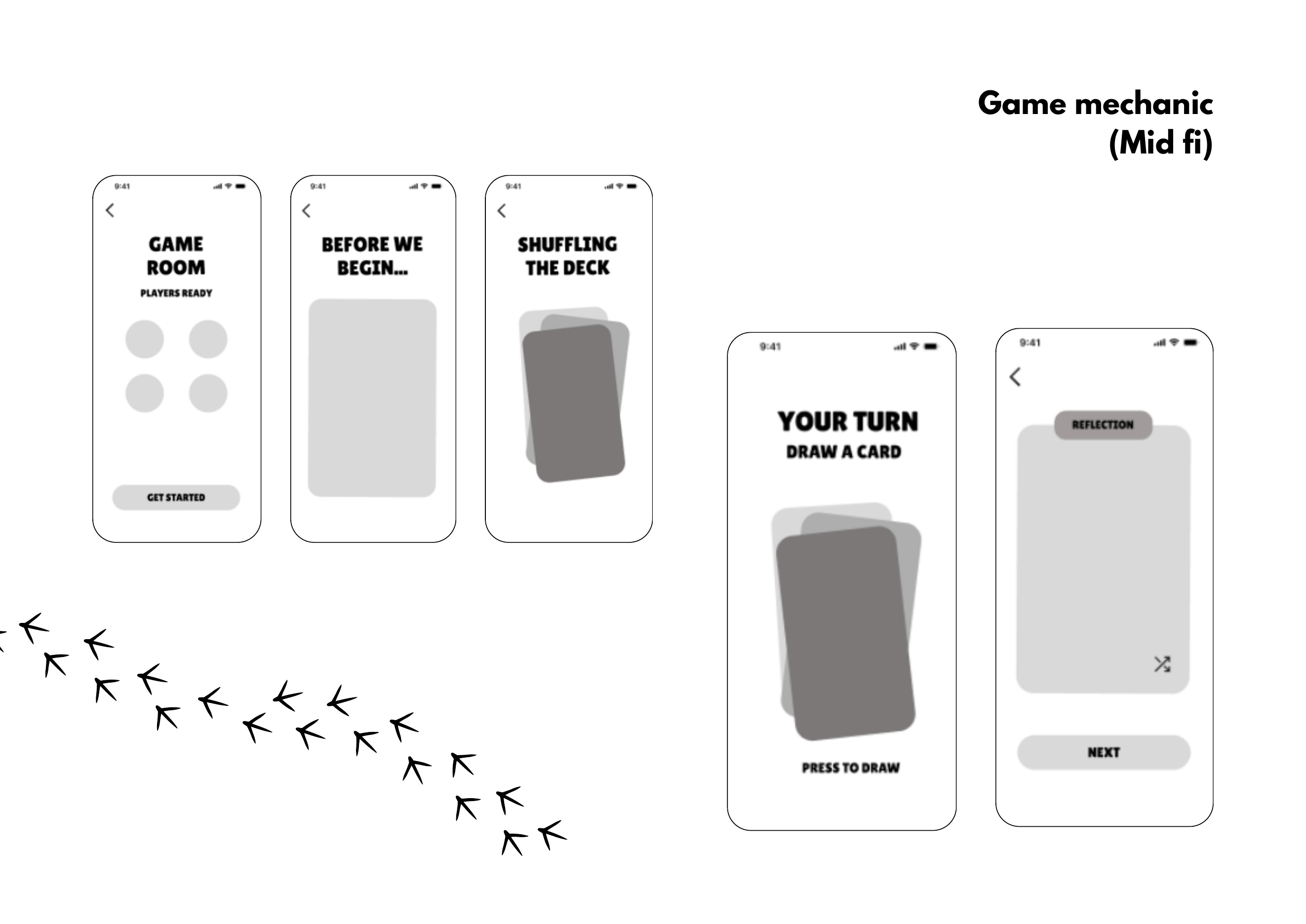
Full Unsaid mid-fidelity process board
Mid-fi · Clarifying screen hierarchy and game mechanics.
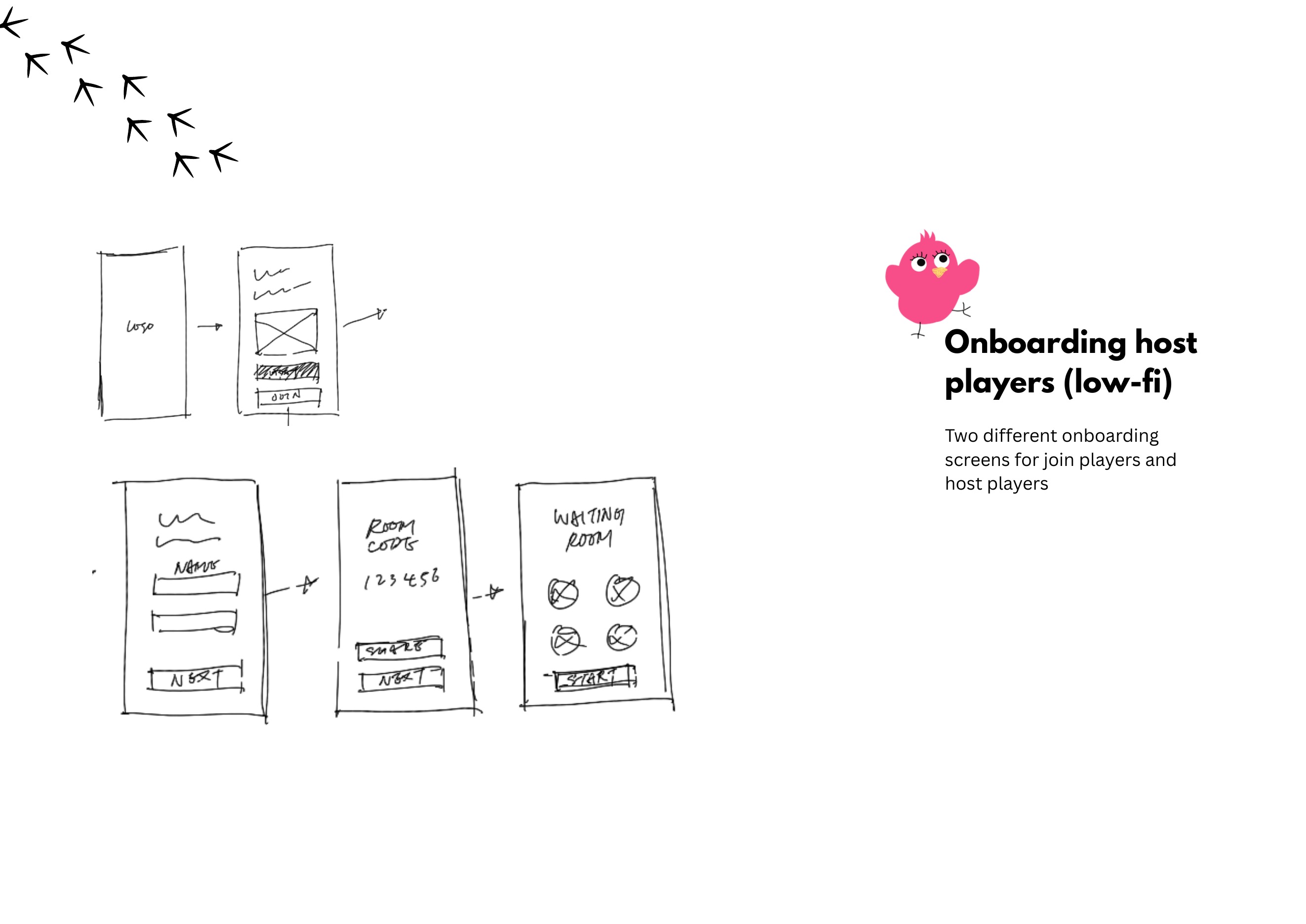
Low-fidelity Unsaid host onboarding sketches
Low-fi · Host

Finding the shortest way to start

The earliest host flow tested only the essential room details before inviting other players.

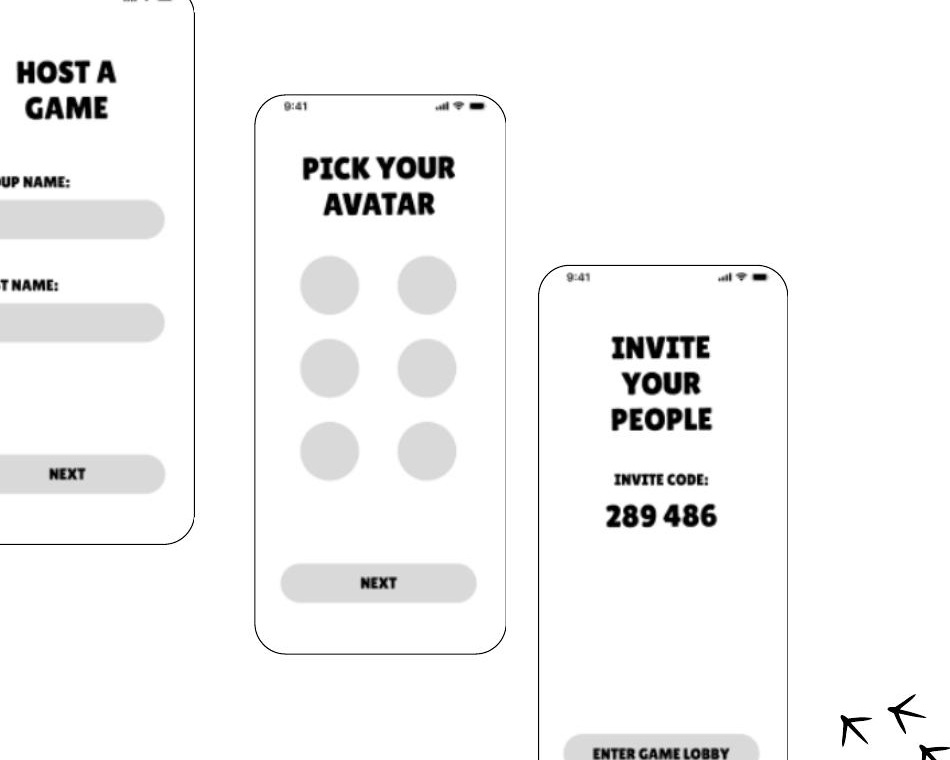
Mid-fidelity Unsaid host and invitation screens
Mid-fi · Host

Making invitation feel immediate

Avatar selection and the room code became a compact sequence with one clear action per screen.

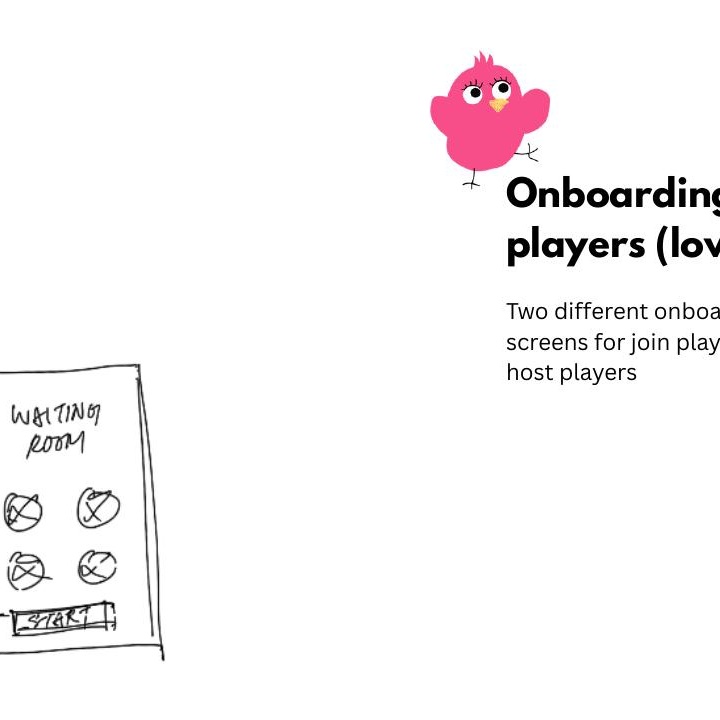
Low-fidelity Unsaid join-player sketches
Low-fi · Join

Testing how strangers enter together

Paper flows explored code entry, room naming, avatar selection and visibility of the waiting group.

Mid-fidelity Unsaid join and room screens
Mid-fi · Join

Reducing uncertainty before play

The join flow gained clearer progress, identity choices and a room state showing who had already arrived.

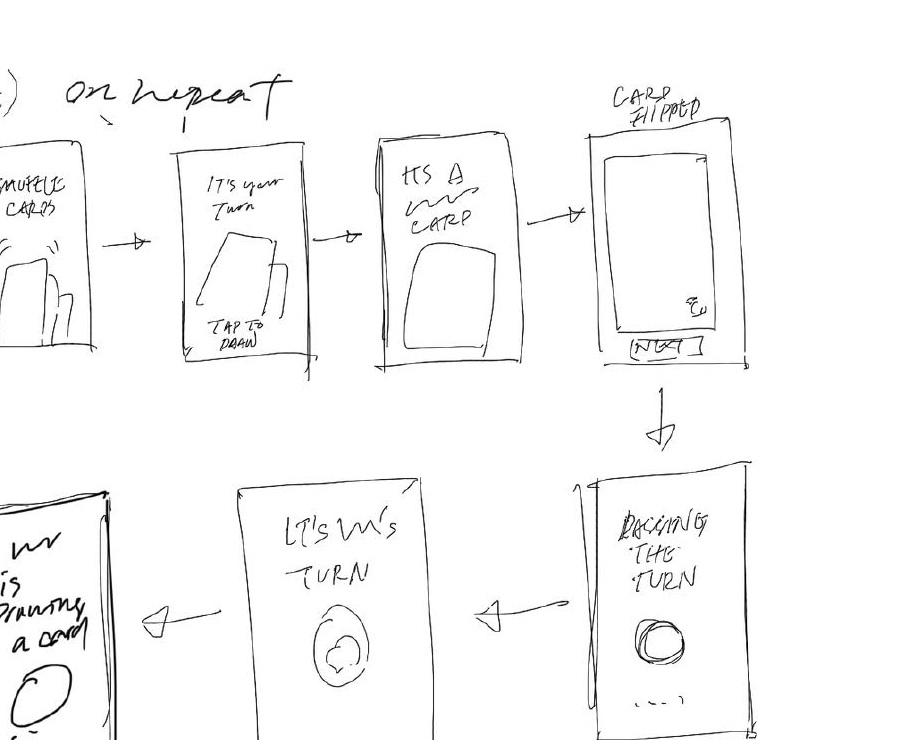
Low-fidelity Unsaid prompt and turn-taking sketches
Low-fi · Game loop

Working out turn-taking

Rough screens tested drawing, answering and handing the moment to the next person without interrupting the conversation.

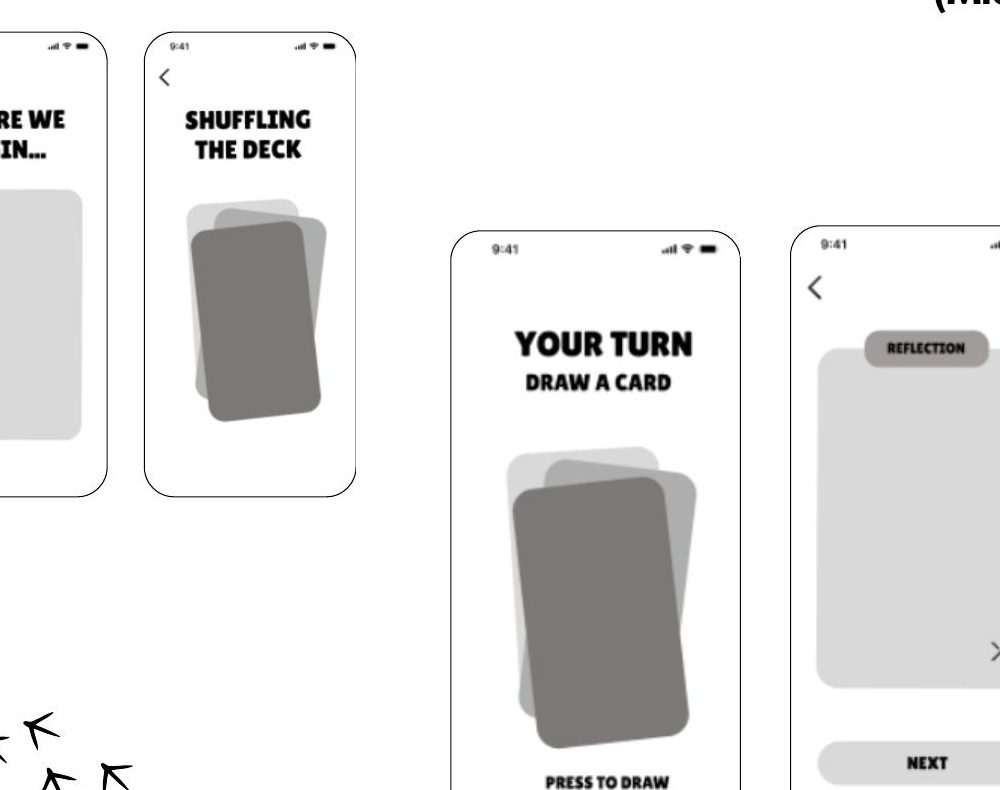
Mid-fidelity Unsaid prompt-card and turn screens
Mid-fi · Game loop

Making the rhythm visible

The refined sequence clarified shuffle, prompt selection, whose turn it was and how the group moved forward.

04 · Making vulnerability feel approachable

A serious purpose with a playful voice.

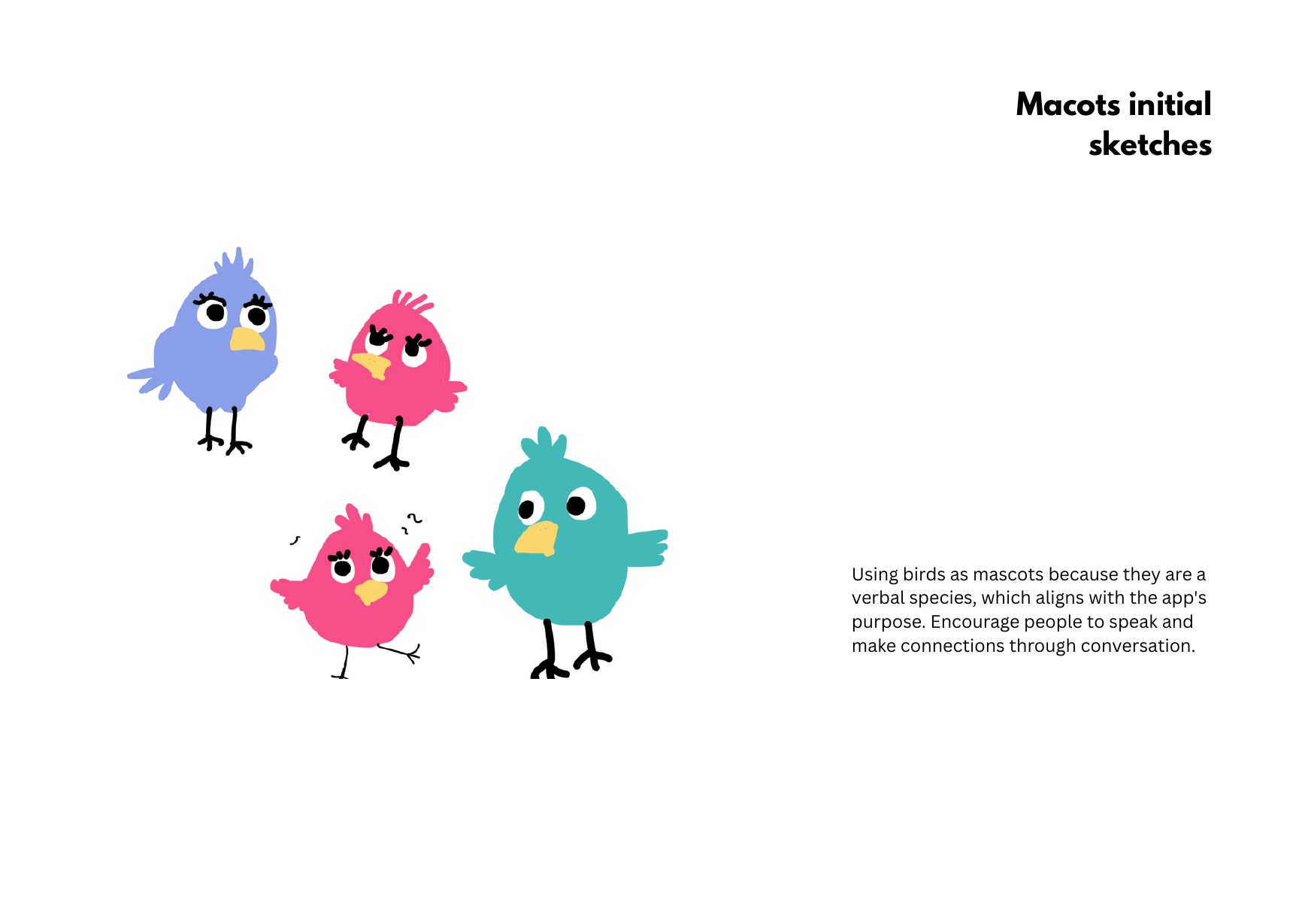
I chose birds as mascots because they are vocal, social creatures. Their imperfect personalities make the game feel warm rather than clinical, while the vivid palette gives sensitive conversations energy and optimism.

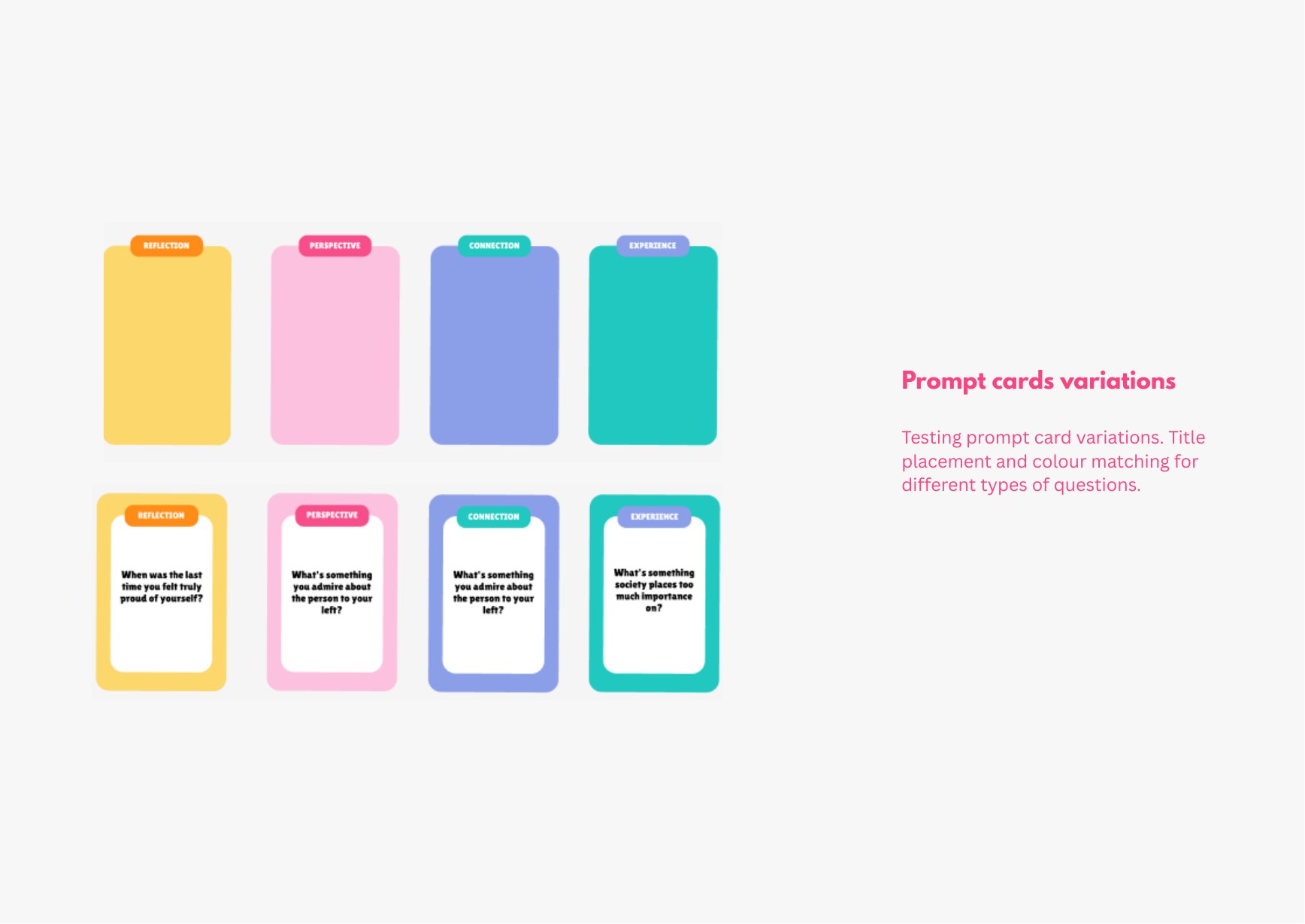
Four prompt categories - Connection, Reflection, Experience and Perspective - use colour to help players understand the kind of conversation they are entering.

Initial sketches of the Unsaid bird mascotsColour-coded Unsaid prompt card variations

05 · Designing psychological safety

Players needed a quiet way to say, “not this one.”

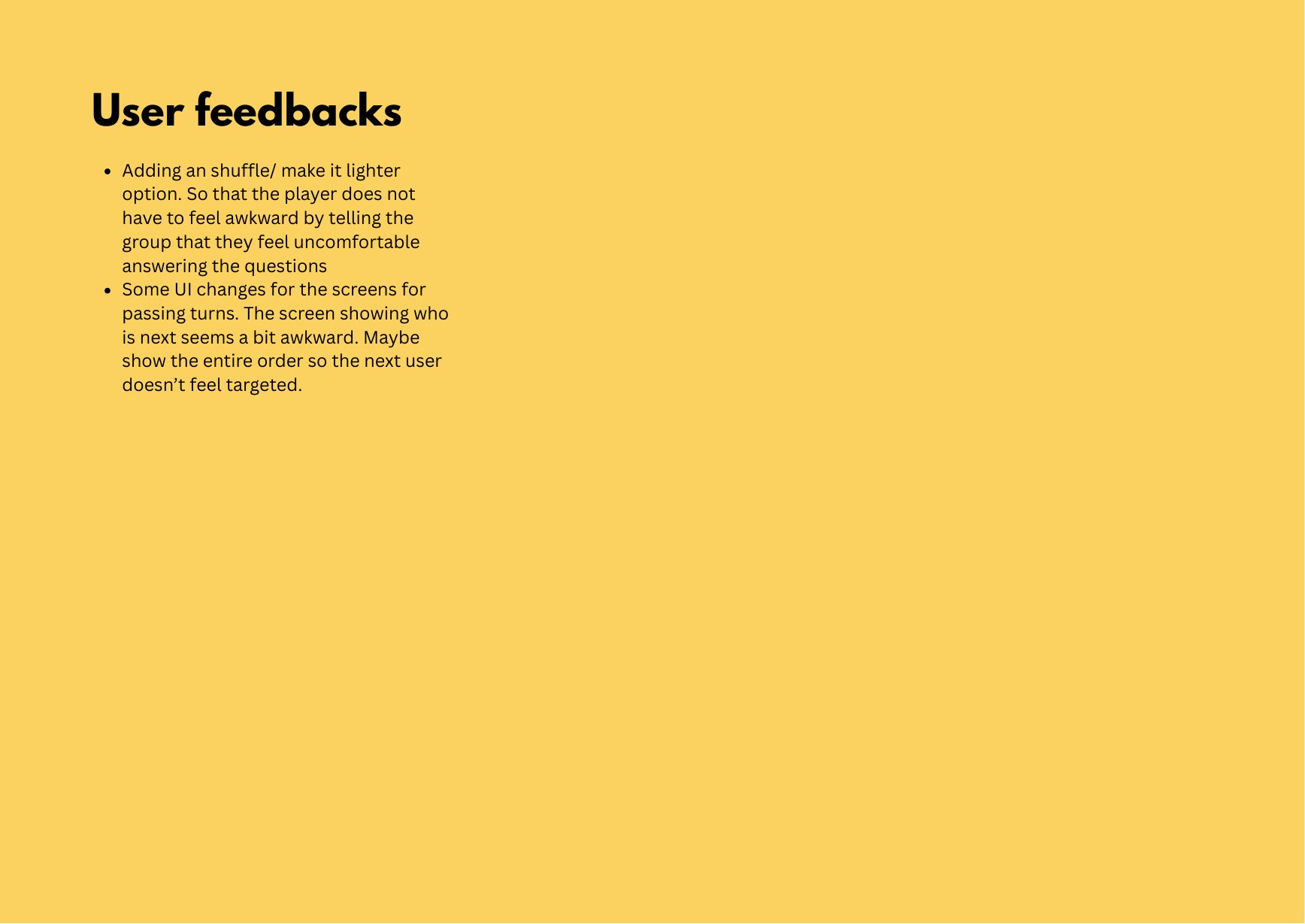
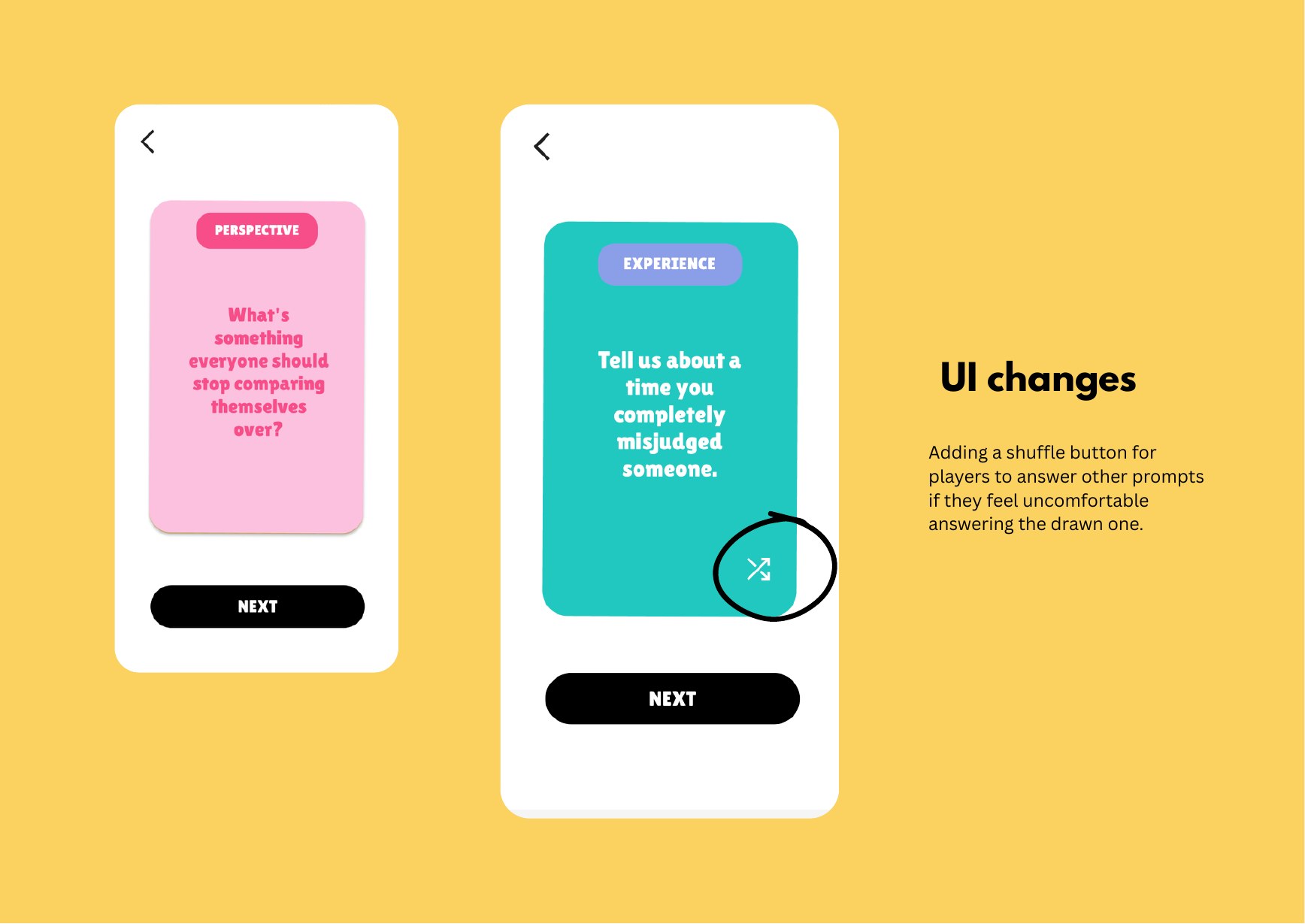
Testing showed that asking someone to reject a question aloud could make the moment more uncomfortable. I added a shuffle control so players could choose another card without having to explain themselves.

I also replaced the single “next player” screen with a visible order and clearer turn labels, reducing awkwardness and helping the whole group stay present.

User feedback that shaped the Unsaid interactionShuffle control added after Unsaid user feedback

06 · Iteration log

The final experience came from repeatedly removing pressure.

The strongest improvements were changes that made participation clearer, safer and more inclusive.

01

The topic became broader

Started withThe first concept focused mainly on beauty standards and visual diversity.

What I learnedFeedback suggested it resembled a cosmetic app and excluded other sources of self-doubt.

What changedI reframed Unsaid around self-perception, identity, lived experience and social expectations.
02

Turn-taking became visible

Started withA simple “next player” screen moved the game forward without showing the wider order.

What I learnedGroups could lose track of whose turn was next, allowing confident voices to dominate.

What changedI introduced a visible turn order and clearer labels so everyone could anticipate and contribute.

03

Passing became private

Started withPlayers had to reject an uncomfortable prompt in front of the group.

What I learnedExplaining why they did not want to answer created the exact pressure the game aimed to remove.

What changedA shuffle control lets players quietly choose another card without justification.

04

The audience expanded

Started withUnsaid was initially designed only for groups of close friends.

What I learnedTesting showed the mechanics could help strangers build trust if the tone was adjustable.

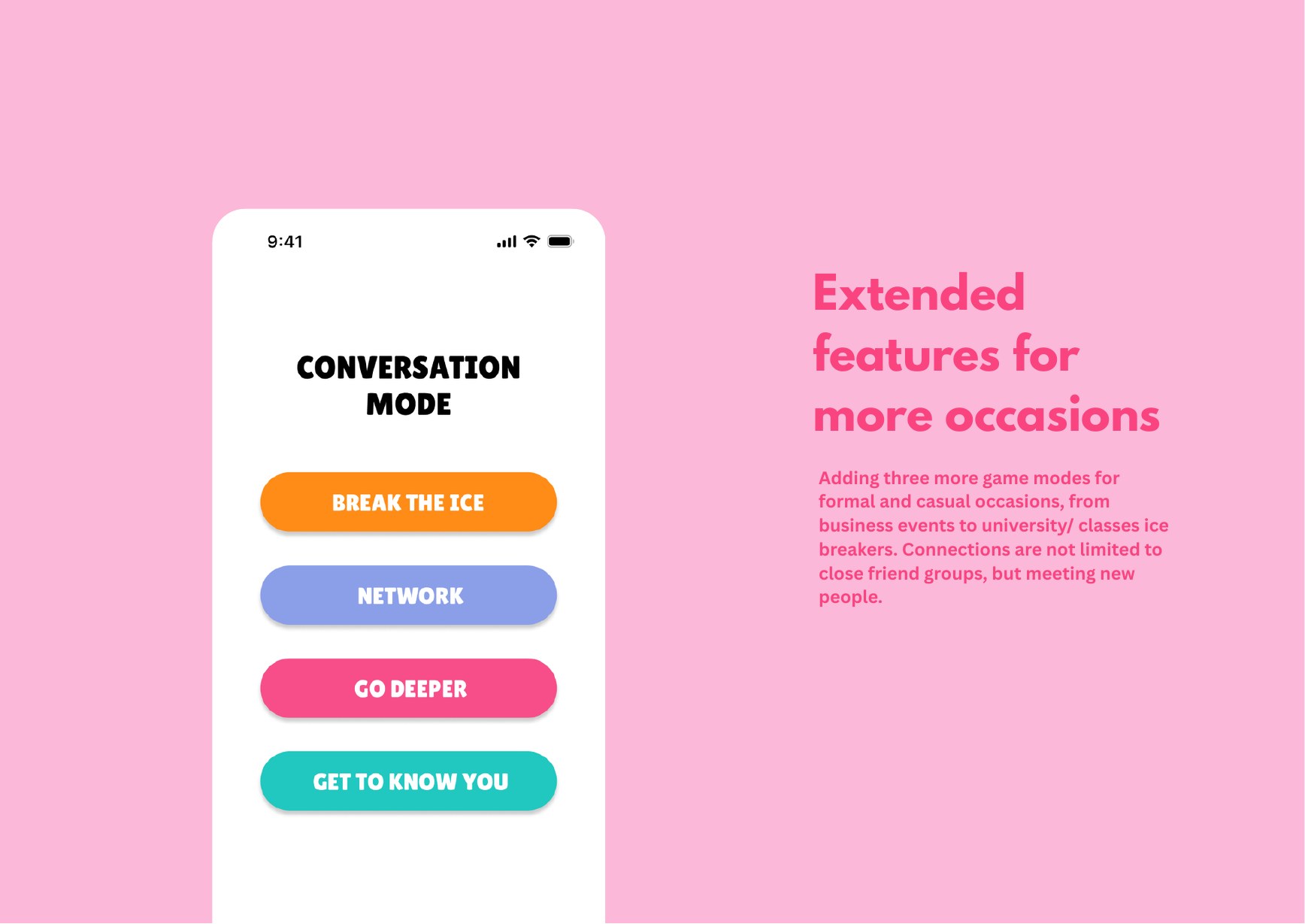
What changedI added modes for O-Week, classrooms, workplaces and informal gatherings.

07 · Expanding the experience

Not only for close friends.

Feedback pushed the concept beyond intimate friendship groups. I added modes for university icebreakers, O-Week, classrooms and workplace events, letting facilitators choose a tone that fits the room.

Extended Unsaid conversation modes for different social settings
Unsaid prompt cards and turn-based mobile interfaceFriends playing Unsaid together in person

Reflection

The interface starts the conversation.
The people create the connection.

Unsaid taught me that inclusive design lives inside the mechanics: who gets a turn, who feels able to pass, and whether the system makes room for different perspectives. The best outcome is not more screen time. It is the moment everyone looks up and begins to understand each other.

Explore another project