No forced leader
Let teams collaborate without appointing one person to manage everyone else.
(Group project · 2026)
An AI-powered university task planner that makes group work fairer—without making one student become the manager.
Product overview
Students create a team, upload the assignment brief, review AI-generated tasks and track contribution without appointing one person as the manager.
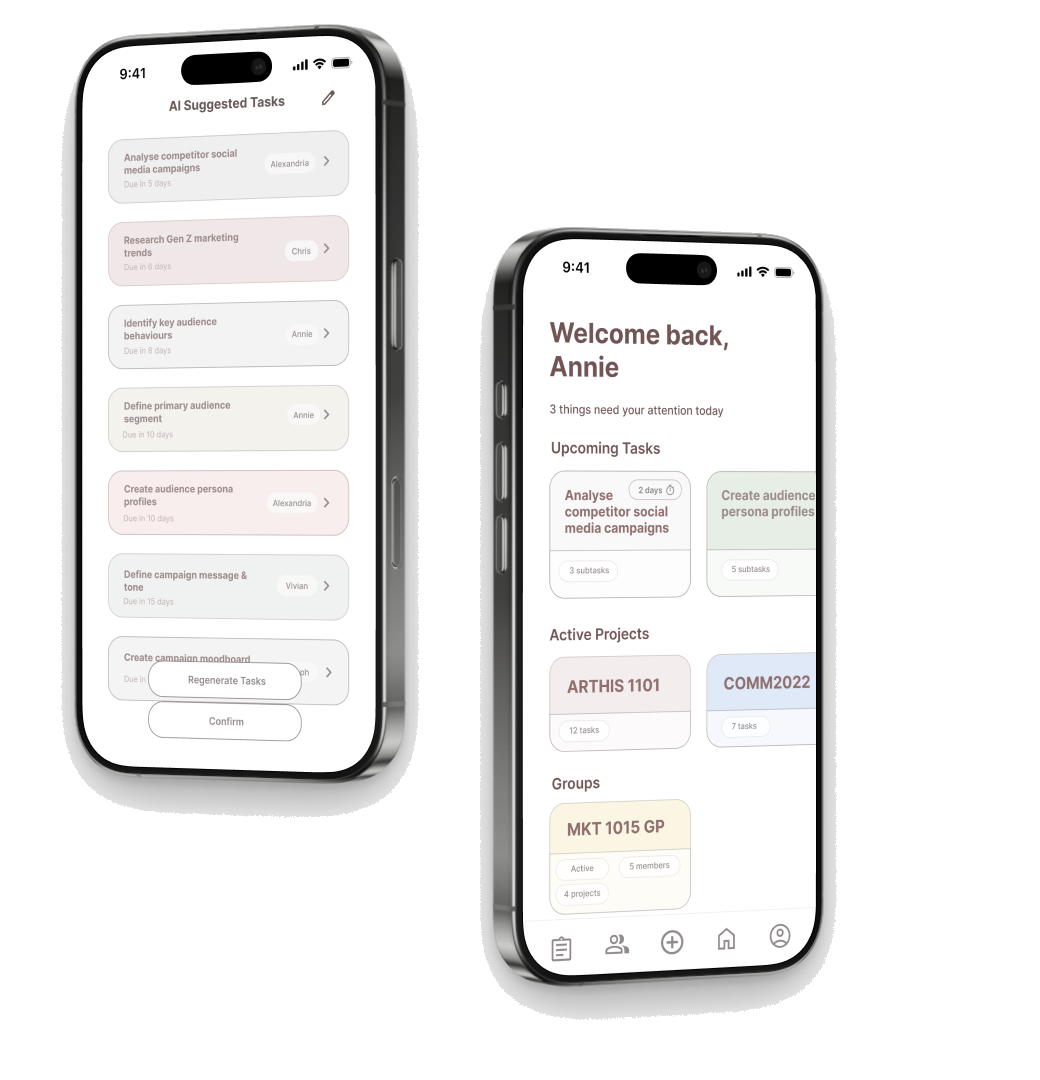
(The premise)
ChallengeUneven contribution, unclear ownership and missed deadlines
My roleResearch · product strategy · UX/UI design
OutcomeA shared workspace built around fairness and accountability
The problem
Students are often placed with people they barely know, then expected to organise themselves immediately. Without clear ownership, tasks get duplicated, deadlines slip and the most responsible person quietly carries the team.
“Group assessments were the only bad memories I have of uni. I end up doing most of the work.”
Design goals
Let teams collaborate without appointing one person to manage everyone else.
Make task distribution transparent, balanced and based on each member’s strengths.
Show task ownership, completion and contribution without awkward confrontation.
The solution
Groupmate turns a messy assignment into a visible plan: the team creates a space, uploads the brief, reviews AI-suggested tasks and follows progress together.
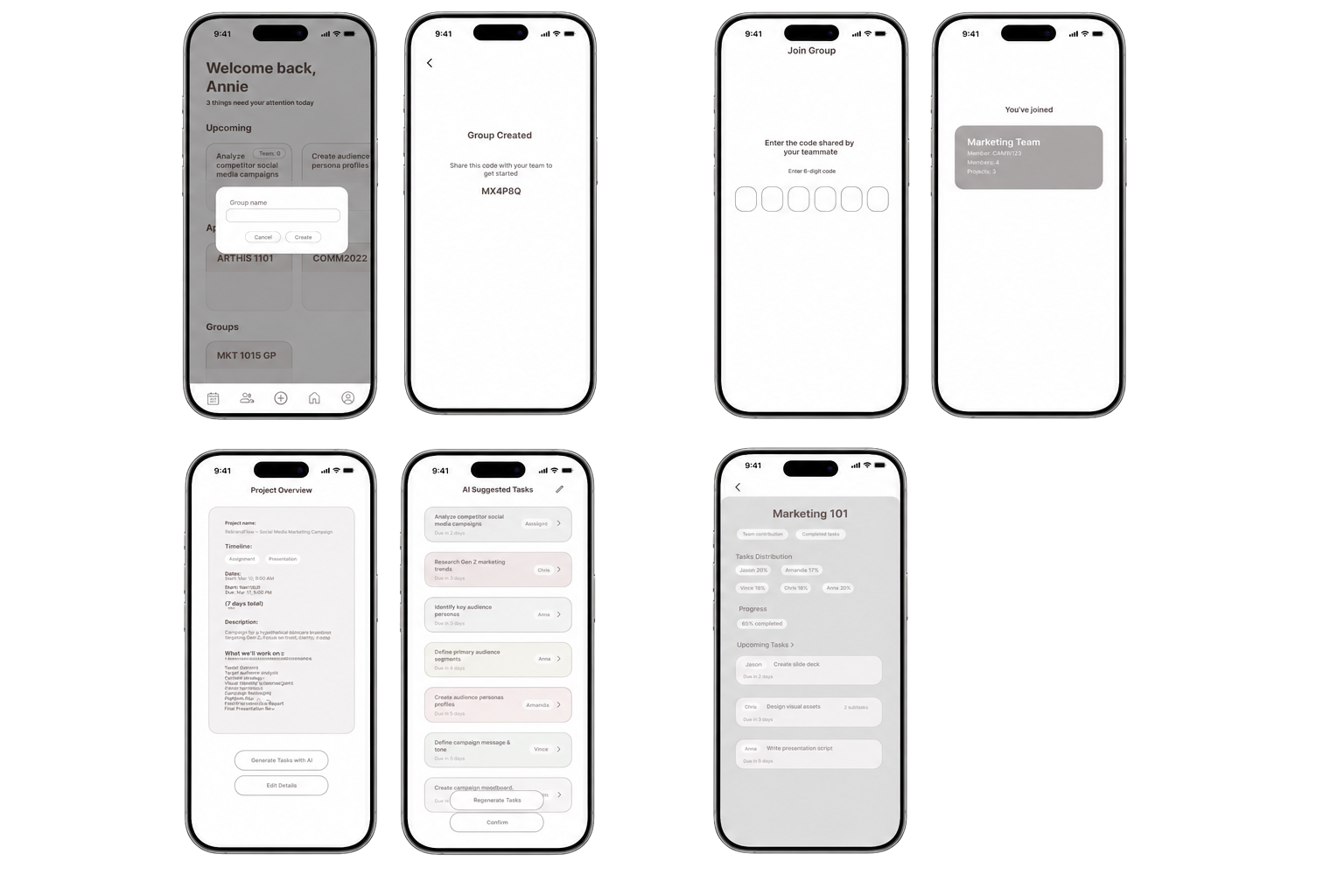
A new shared space generates a unique team PIN.
Classmates enter the PIN without a complicated sign-up.
The team reviews work generated from the brief and distributes it together.
Named tasks and completion records keep responsibility clear.
Core experience
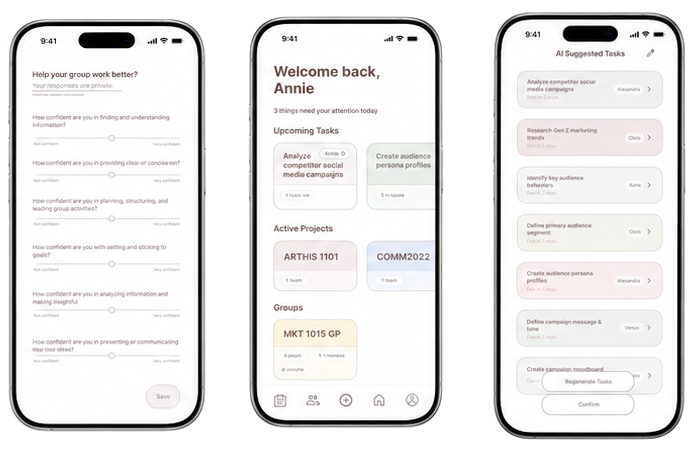
Keep every assignment and presentation in one shared group space.
Turn a project brief into clear tasks, subtasks and realistic deadlines.
Give each member a focused view of exactly what they own.
Make progress lightweight to update and instantly visible to the team.
What makes it different
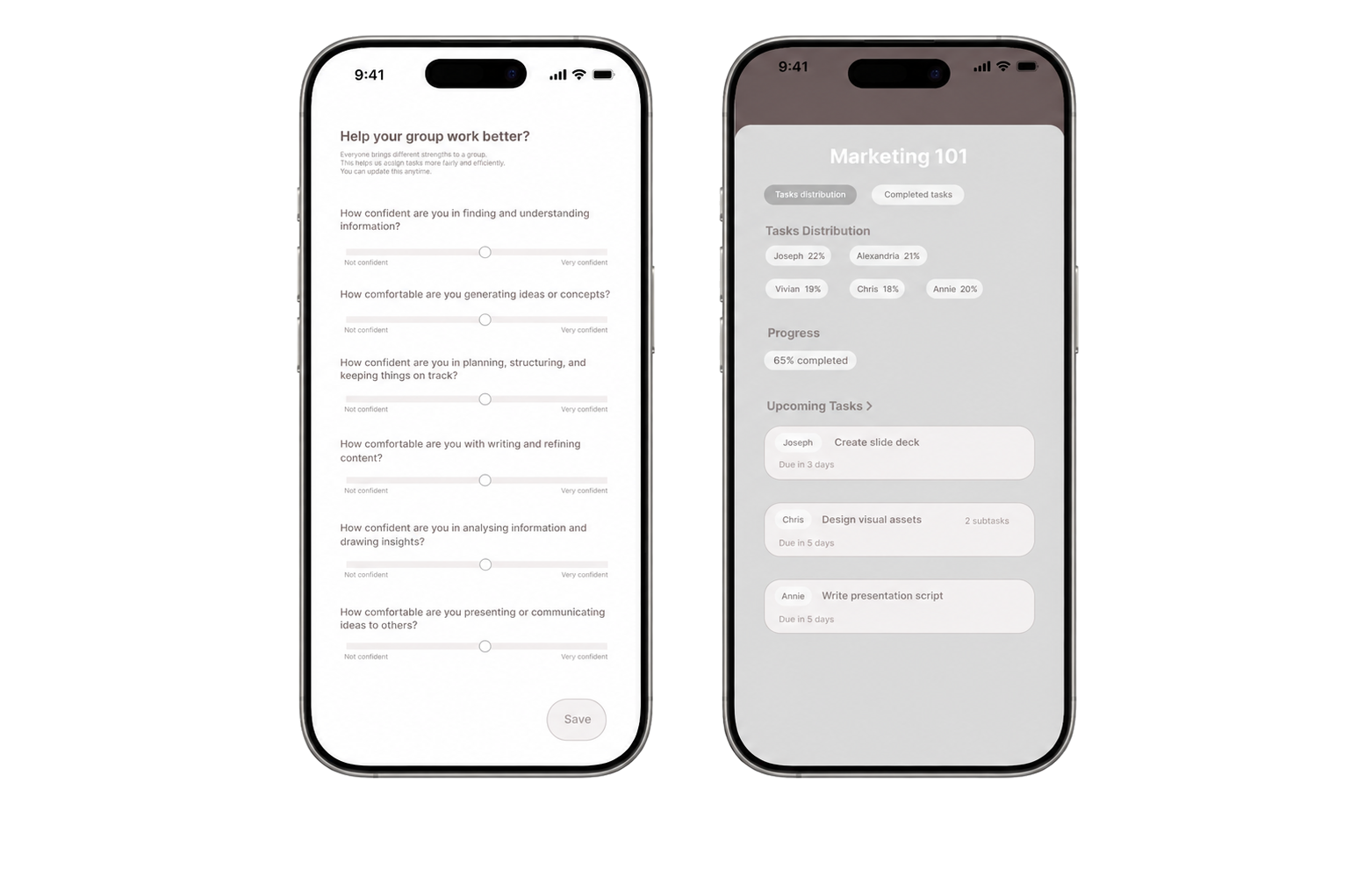
Instead of one person assigning tasks, members share how confident they feel across six areas.
Groupmate can then match people to work that suits their confidence while keeping the overall contribution balanced and transparent.
Design progress
The interface changed whenever a feature added friction, hid responsibility or distracted from collaboration.
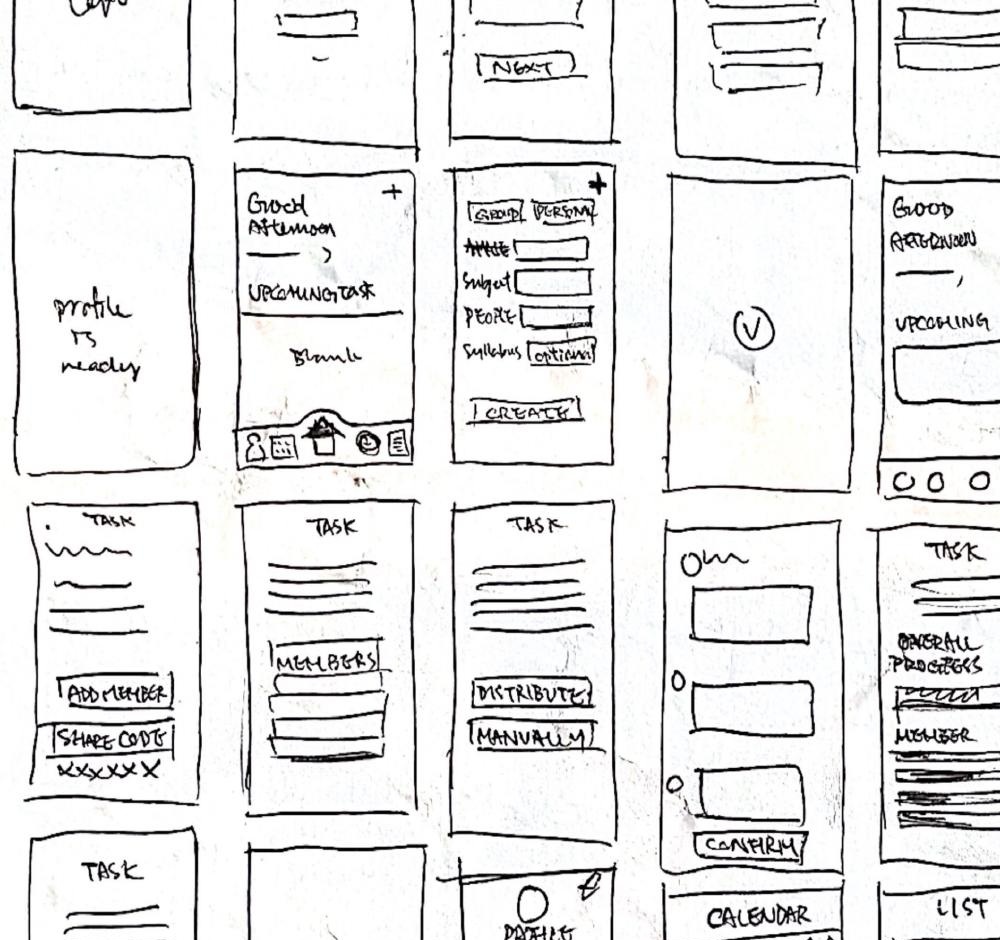
Paper sketches tested group spaces, project cards, task lists and lightweight progress controls before the product scope was narrowed.
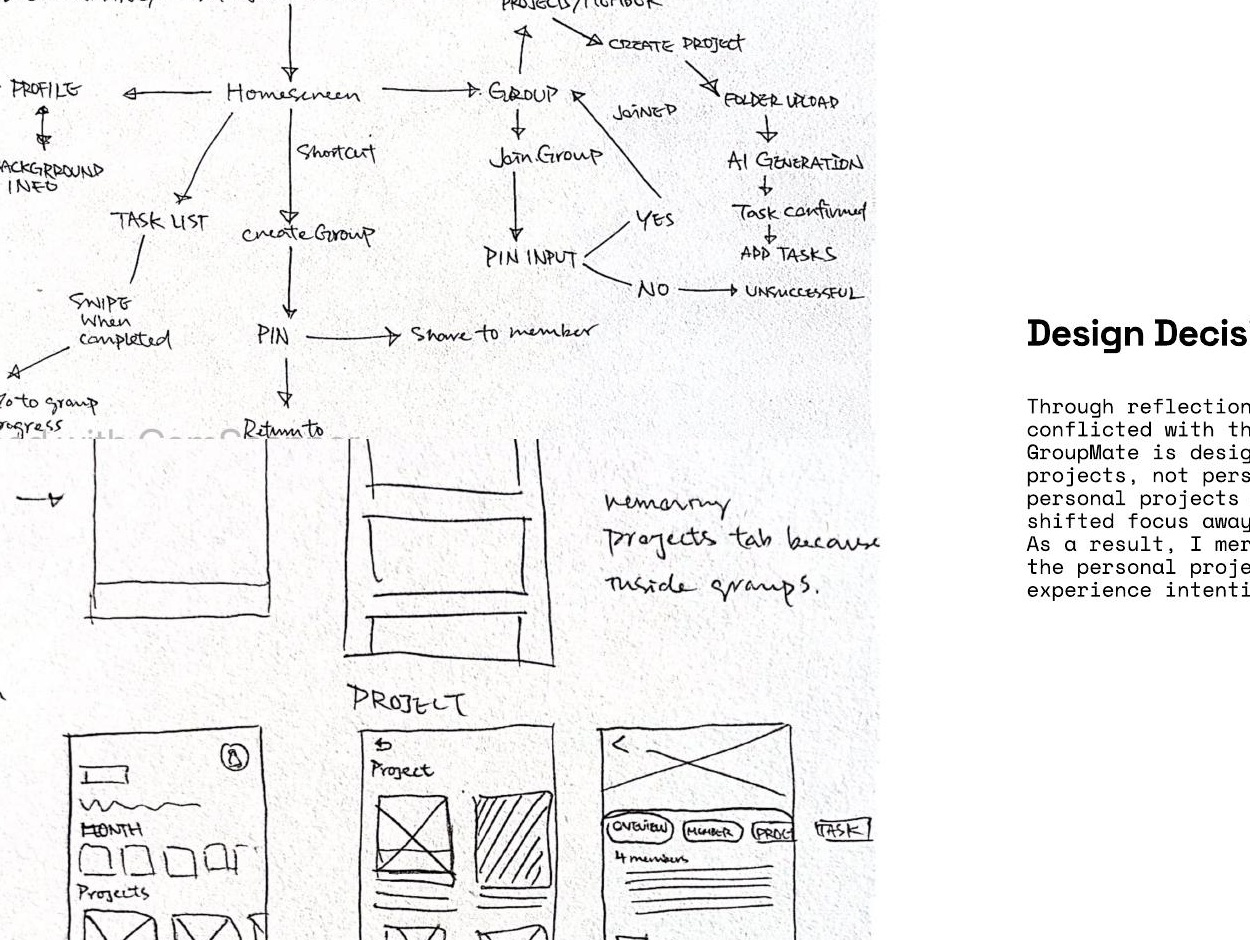
Mapping exercises compared personal projects, shared groups and project ownership, revealing where the original structure felt too broad.
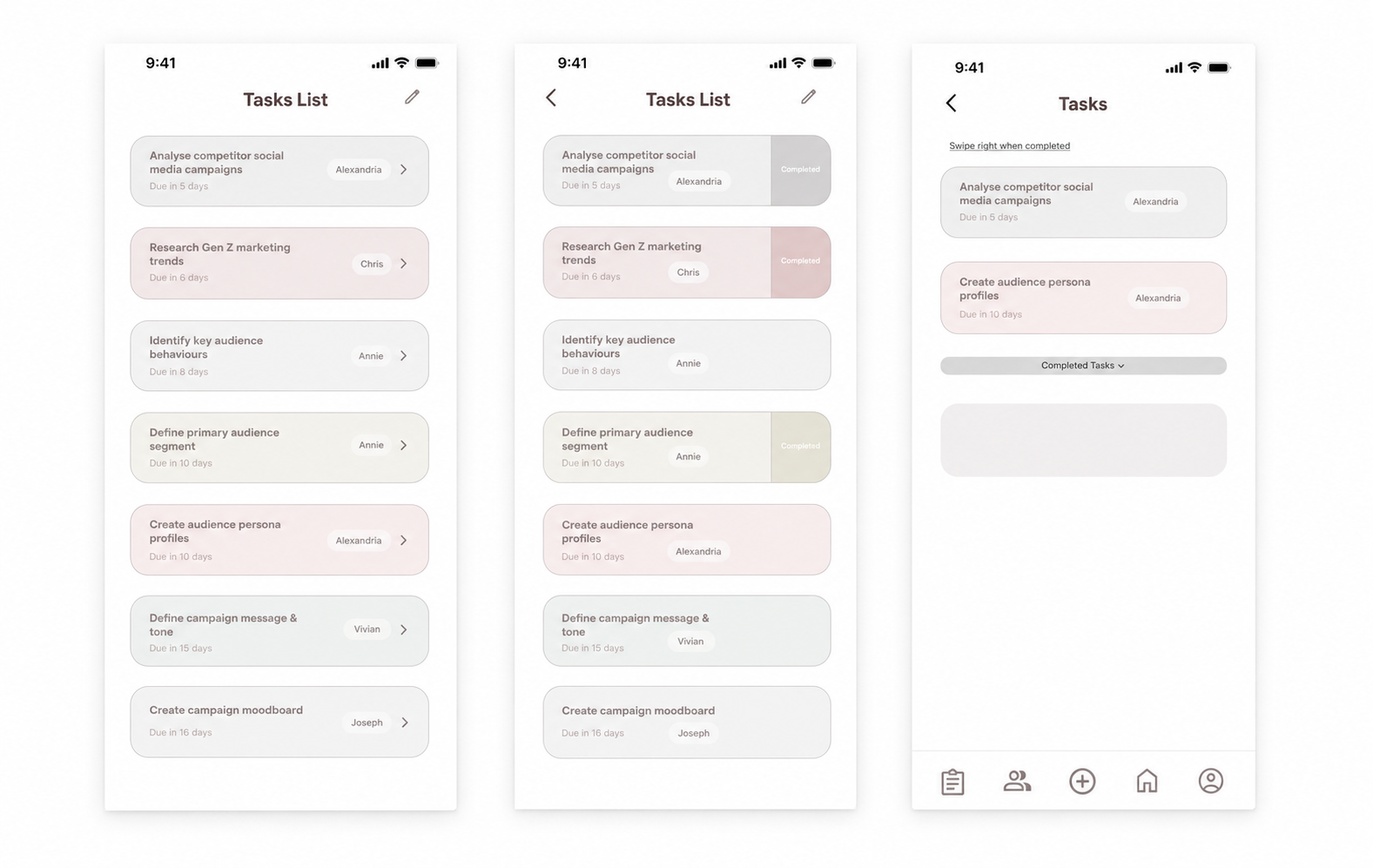
The task list moved from a simple remaining-work view to named assignments, clearer status and individual completion records.
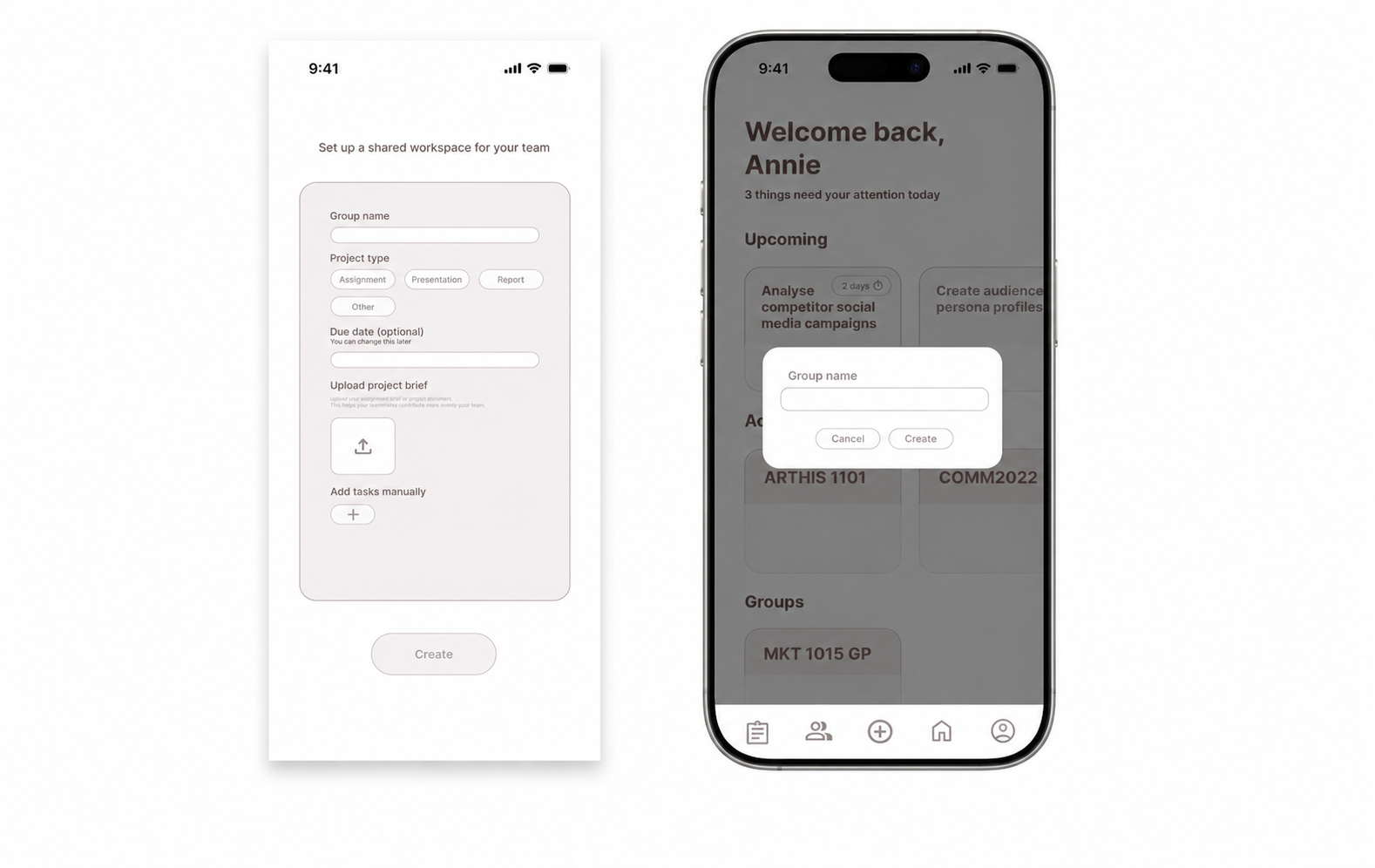
A long project setup was replaced by a quick group-name step and shareable PIN, matching how student teams actually begin.
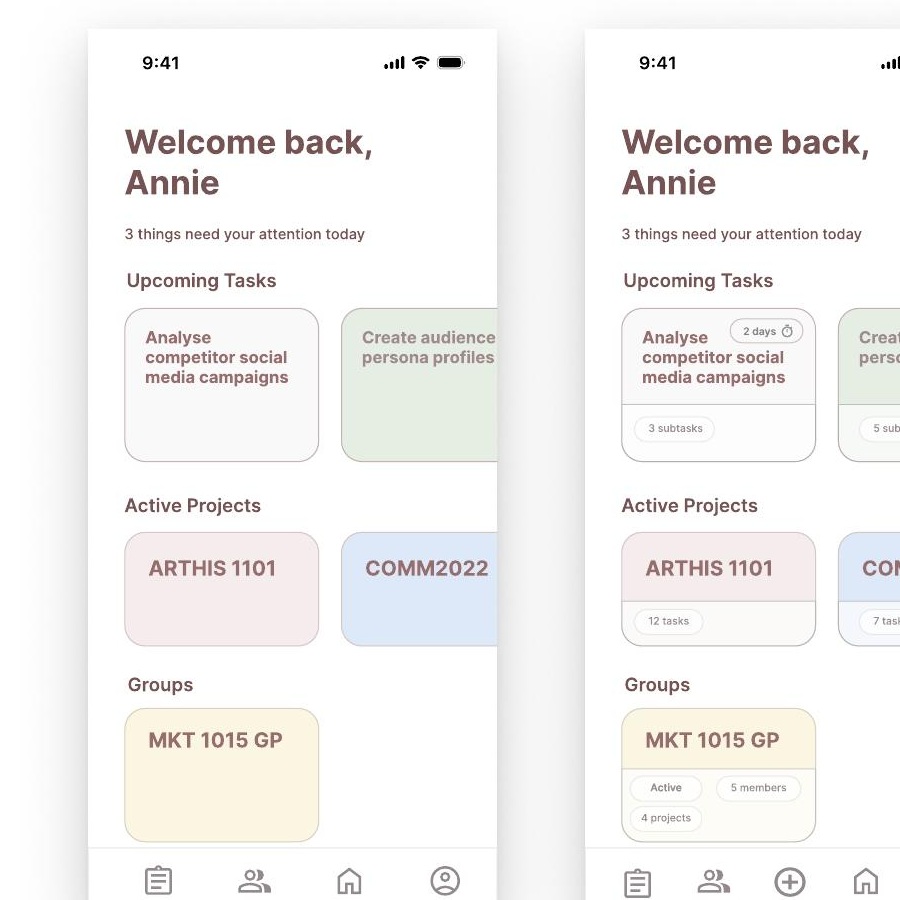
The dashboard gained active tasks, project status and clearer group shortcuts so the next action was visible without extra navigation.
Started withProjects and Groups lived in separate tabs so people could also manage solo assignments.
What I learnedPersonal task management diluted the value and made Groupmate feel like another general planner.
What changedI merged the structure and kept every feature focused on shared academic work.
Started withStudents had to enter complete project details before they could create a group.
What I learnedTeams are often formed before the assignment scope is discussed, so the flow felt premature.
What changedA group-name pop-up and auto-generated PIN make early collaboration faster and more natural.
Started withThe task screen showed work remaining and one overall progress percentage.
What I learnedStudents could not easily see who completed what, leaving responsibility unclear.
What changedIndividual check-offs, completed-task history and named ownership make progress transparent.
Started withBasic cards showed projects and groups with little status information or quick action.
What I learnedUsers still needed extra navigation to understand deadlines, workload and group activity.
What changedTask counts, due times, member totals and a create-group shortcut now surface decisions at a glance.
Reflection
Groupmate shows how thoughtful interaction design can reshape everyday academic collaboration. By making contribution visible and responsibility shared, the experience turns group work from a source of tension into a clearer, more accountable system.
Explore the rest of my work